Inclusion Recovery Hampshire’s Health Engagement and Rough Sleeping Team (HEART) supports people who use drugs or alcohol and may find it hard to get help from other services.
Homelessness is a health issue, not just a housing or social issue, and can have a significant impact on a person’s physical and mental health. We know that factors such as money worries, stigma and where someone lives can create barriers to accessing support. Our team’s bespoke outreach service works with people to help meet their health and housing needs.
How we can help
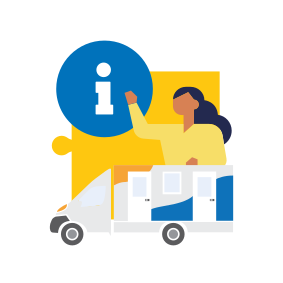
We use mobile clinic vans to take treatment and support to people where they need it. This includes areas where services are hard to reach, where there is a high level of poverty or where access to local pharmacies is limited.
We support people who use drugs or alcohol, including those who may not be in touch with drug and alcohol services or find it hard to get regular support. This includes people who are sleeping rough, staying in hostels, in hospital or using needle and syringe services.
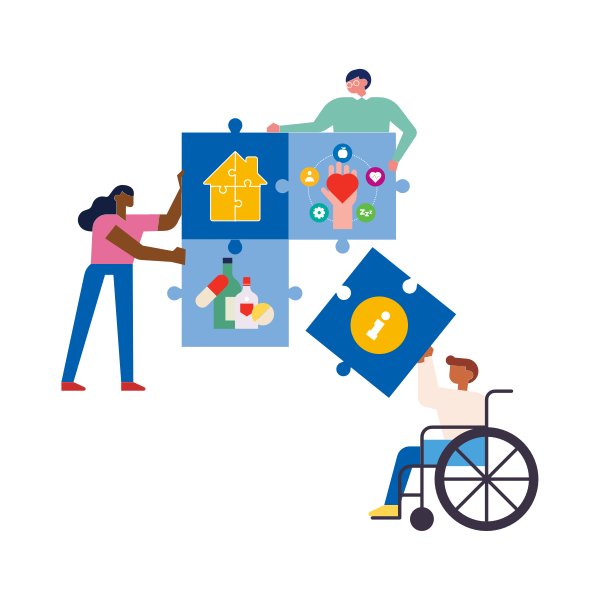
We offer support based on each person’s needs. This can include:
- Advice and support to reduce the risks linked to drug and alcohol use.
- Help to access housing and other services.
- Practical support to help people make positive changes.
- Incentives to support progress towards personal health goals.
Get in touch
Would you like to know more about how HEART can help? You can complete our online referral form or contact us for a confidential chat.
Phone or text: 07791466272
Email: inclusion.heart@mpft.nhs.uk
What we can do
• Work with you if continue drinking or using drugs
• Give advice and guidance on how to reduce the risks from drug and alcohol use
• Give practical support and advocacy
• Work with other NHS services and agencies
• Safer injecting advice, including vein care, site rotation and infection prevention
• Needle and syringe provision, including sterile injecting equipment, foil and safe disposal
• Provide Naloxone and overdose awareness training
• Provide training on basic life support in overdose
• Emergency wound care from injecting related wounds
• Access to drug checking or access to local drug-alert information where available
• Advice on managing increased-potency, adulterated or contaminated drug supplies
• Opioid substitution treatment, including rapid access and flexible prescribing options
• Blood-borne virus testing, hepatitis B vaccination and pathways into hepatitis C and HIV treatment
• Physical-health checks, including blood pressure, weight, respiratory health and liver-health assessment
• Safer alcohol-use planning, including withdrawal-risk assessment, thiamine provision and managed reduction
• Targeted advice for crack cocaine, ketamine, synthetic opioids, benzodiazepines and other locally prevalent substances
• IPED and steroid interventions, including sterile equipment, and advice on injection technique
• Medication reviews to identify interactions, over-sedation and risks from combining substances
• Hydration, nutrition, sleep and heatwave or severe-weather advice
• Peer-led harm reduction education and access to lived-experience support
• Direct referral and supported attendance for housing, mental health, safeguarding and primary-care services
• Take-home written information in accessible formats, languages and literacy levels
• Follow-up after non-fatal overdose, hospital admission, missed treatment or other high-risk events
• Regular review of your goals and outcomes
• Take self and professional referrals
What we can't do
• Make drug and alcohol use completely safe
• Work with people under 18 (please refer to the young person’s service)
• Work with people who don’t have a drug and alcohol problem
• Provide emergency accommodation (please contact your local authority)
• Provide healthcare outside of drug and alcohol treatment, but we can help you get this elsewhere by partnering with other NHS services
Our aims
- Reduce deaths from drug and alcohol related health harms
- Reduce rough sleeping
- Reduced deaths from overdose
- Improve uptake of support for people discharged from hospital drug and alcohol related admissions
- Empower people to access information about keeping themselves safe
- Make people feel valued and invested in their health
- Improves health outcomes for people using drugs and alcohol
- Reduced hospital admissions
- Reduced use of emergency services
“I was a mess at the end of my tether and ready to give up, then I met Clare from the harm reduction outreach team. She supported me and arranged the help I needed so badly. I am now 14…Read more
“I have used the van as they are really kind and helpful…the support from them was brilliant”.
“Pharmacies weren’t able to get what was needed so I was highly struggling and having to use the same equipment multiple times. Up until the Inclusion van became available and since then I’ve been completely safe and not at risk…Read more
“Staff were nice and polite. Appreciated the free sim cards. Able to dispose of needles which is helpful. Chris and Clare friendly and helpful.”
“Hi all, I’ve literally just come off the phone to Hepatology at the Hospital and found out about [person] being admitted for a blood transfusion. Great work for getting her to hospital everyone – this probably saved her life”